
What’s really in your beauty routine? Learn about five ingredients and chemical groups found in some personal care products and simple ways to reduce unnecessary exposure.
When we talk about breast cancer prevention, conversations often focus on screening, family history, and genetics.
Those things matter enormously.
But researchers are also asking another important question:
What role might our everyday environmental exposures play in breast health?
Breast cancer is complex. There is no single cause, and scientists are still studying how environmental chemicals may influence breast cancer risk.
What we do know is that we're exposed to chemicals through many sources throughout our lives... from food and water to household products, plastics, air pollution, and personal care products.
We can't eliminate every environmental exposure.
But we can become more informed about the products we use every day and make thoughtful changes where they make sense.
Here are five categories of ingredients and chemicals worth knowing about when evaluating your beauty and personal care routine.
1. Parabens
What Are Parabens?
Parabens are preservatives used in some cosmetics and personal care products to prevent the growth of bacteria and mold.
Common examples include:
- Methylparaben
- Propylparaben
- Butylparaben
- Ethylparaben
Why Are Parabens Being Studied?
Certain parabens have demonstrated estrogenic activity, meaning they can interact with estrogen pathways in the body.
That's relevant to breast-health research because hormones, particularly estrogen, play an important role in breast tissue, and many breast cancers are hormone-sensitive.
This does not mean using a product containing parabens causes breast cancer.
Research continues into whether and how exposure to specific endocrine-active chemicals may influence breast biology and disease risk.
How Can You Reduce Exposure?
Parabens are relatively easy to identify on an ingredient label because their names typically end in “-paraben.”
If you'd prefer to reduce your exposure, choose products formulated without them.
2. Phthalates
What Are Phthalates?
Phthalates are a family of chemicals with many different uses.
In cosmetics and personal care products, certain phthalates have historically been used in products such as nail polish, hair spray, and fragrance formulations.
One called diethyl phthalate (DEP) has been used as a solvent and fixative in fragrance.
Why Are Phthalates Being Studied?
Some members of the phthalate family have raised concerns because of their potential effects on reproductive and endocrine systems.
But it's important not to treat every phthalate as identical.
The FDA currently says it does not have evidence that the phthalates currently used in cosmetics pose a safety risk at their present uses.
Scientists and public-health researchers nevertheless continue studying endocrine-disrupting chemicals and cumulative exposure.
How Can You Reduce Exposure?
Look for brands that specifically state they are phthalate-free.
And because individual fragrance ingredients don't always have to appear separately on cosmetic labels, consumers seeking to minimize fragrance-related exposures can choose fragrance-free products or brands that provide greater fragrance transparency.
3. PFAS, “Forever Chemicals”
What Are PFAS?
PFAS stands for per- and polyfluoroalkyl substances.
They're a large family of synthetic chemicals known for properties such as water, oil, stain, and heat resistance.
Certain PFAS have been intentionally used in cosmetics including lipstick, eyeshadow, moisturizer, nail products, blush, and cleansers to affect texture, consistency, shine, or conditioning.
Why Are PFAS a Concern?
Many PFAS break down extremely slowly, which is why they're often called “forever chemicals.”
Some can accumulate in people, animals, and the environment over time.
Research has connected exposure to certain PFAS with several potential health effects, and scientists are investigating their relationship with hormone function and cancers, including breast cancer.
However, we need to make an important distinction:
The science does not currently establish that PFAS-containing cosmetics cause breast cancer.
In fact, the FDA's most recent assessment found substantial gaps in the available data about PFAS exposure specifically through cosmetics and concluded that there wasn't enough information to make definitive safety determinations for most PFAS used in cosmetic products.
That's exactly why continued research, and informed consumer choice, matters.
How Can You Reduce Exposure?
If avoiding PFAS is important to you, read ingredient labels and look for terms such as:
- PTFE or polytetrafluoroethylene
- Perfluoro-
- Polyfluoro-
- Fluoro-
You can also look for brands that specifically state their products are formulated without intentionally added PFAS.
4. Fragrance
What Does “Fragrance” Mean?
Turn over a bottle of lotion, body wash, perfume, or self-tanner and you may see:
Fragrance.
Or:
Parfum.
It sounds like one ingredient, but it may actually represent a mixture of fragrance ingredients.
Under U.S. cosmetic labeling rules, individual ingredients within a fragrance formulation generally don't have to be separately disclosed on the ingredient label.
That makes fragrance different from many of the other ingredients in your beauty routine.
Why Does Fragrance Matter?
Not every fragrance ingredient is harmful.
However, fragrance formulations can contain ingredients that some consumers may wish to avoid, and certain fragrance components can also trigger allergies or sensitivities in susceptible people.
The real issue is transparency.
If reducing unnecessary chemical exposure is your goal, knowing what's actually in the products you're using makes it much easier to make informed decisions.
How Can You Reduce Exposure?
Choose products that are:
- Fragrance-free, or
- Transparent about how they're scented and the ingredients they use.
And remember: natural doesn't automatically mean harmless. Essential oils and botanical fragrance ingredients can cause reactions in some people, too.
5. Certain Color Additives and Contaminants
What Are Color Additives?
Color additives are used to give cosmetics everything from the perfect pink lipstick to a dramatic black mascara.
Unlike most cosmetic ingredients, color additives are specifically regulated by the FDA and must be approved for their intended cosmetic use.
So simply seeing a synthetic color on an ingredient label does not mean that ingredient is toxic or causes breast cancer.
So What's the Concern?
The more accurate conversation involves specific color additives and potential contaminants, rather than labeling all synthetic dyes as dangerous.
Cosmetics can potentially contain trace contaminants such as heavy metals, depending on the ingredients, manufacturing process, and product.
That's why sourcing, manufacturing standards, ingredient quality, and regulatory compliance matter.
How Can You Reduce Exposure?
If you prefer a simpler beauty routine, you can choose products without unnecessary added color.
But there's no need to assume every synthetic color listed on a cosmetic label is harmful.
Specific ingredients, and actual exposure, matter more than whether something is simply labeled “synthetic.”
How Can You Reduce Chemical Exposure From Beauty Products?
You don't need to throw away everything in your bathroom.
Instead, think about reducing unnecessary exposure over time.
Start with the products you use most frequently.
Pay particular attention to products you apply over large areas of your body or leave on your skin for extended periods.
Read ingredient labels.
Choose companies that are transparent about their formulations.
And when you finish a product, consider whether there's an alternative with an ingredient profile you prefer.
One thoughtful swap at a time can create a very different beauty routine.
Why Your Self-Tanner Is a Great Place to Start
Think about how you use self-tanner.
You don't apply it to one tiny spot.
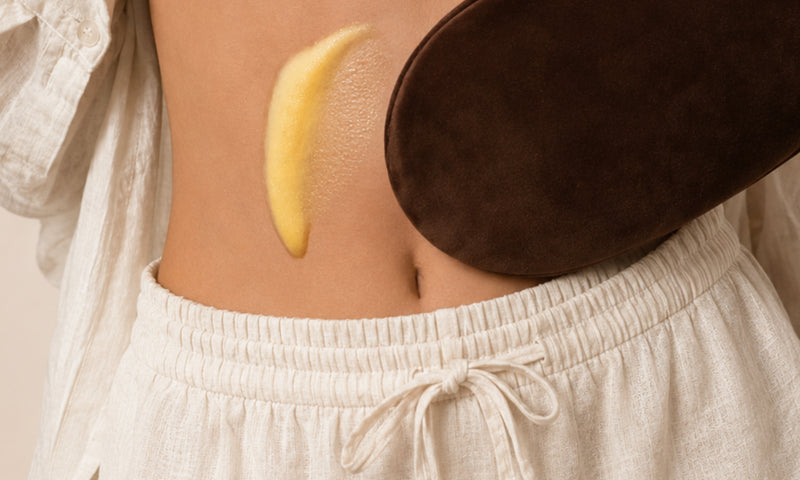
You typically apply it across your arms, legs, stomach, chest, back, and other large areas of skin, and leave it there for hours.
That's one reason we've always believed the ingredients in a self-tanner deserve just as much attention as the color it creates.
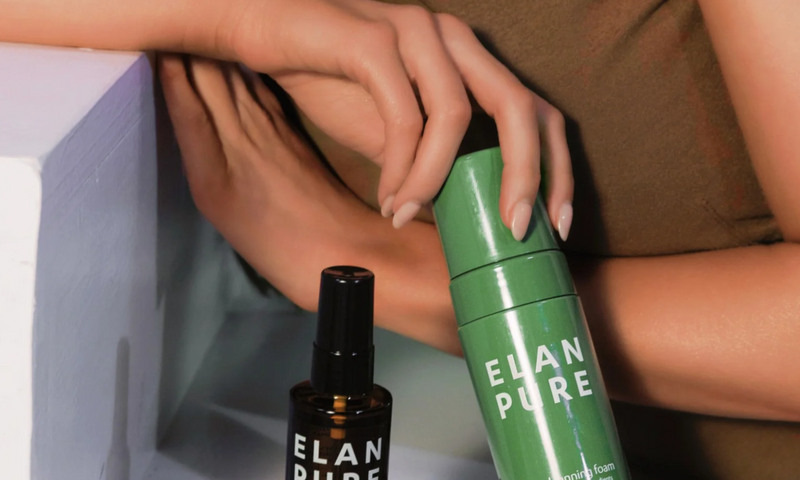
Elan Pure Self-Tanner is formulated without:
- Synthetic fragrance.
- Parabens.
- Phthalates.
- PEGs.
- Synthetic dyes.
- SLS.
Instead, our formula combines plant-based DHA and organic erythrulose with hydrating glycerin and hyaluronic acid and skin-loving ingredients including cucumber and calendula.
And rather than synthetic fragrance, our signature scent comes from real vanilla extract.
Because your self-tanner should give you beautiful color ...not make you wonder what's hiding inside the bottle.
Breast Cancer Awareness Is Also About Education
Breast Cancer Awareness Month gives us an opportunity to talk about screening and early detection.
But awareness can go further.
It's also an opportunity to learn about breast health, understand our individual risk factors, and pay attention to emerging research into environmental exposures.
We can't control every factor that influences breast cancer risk.
And no beauty swap can guarantee breast cancer prevention.
But we can ask better questions about the products we use every day.
We can read labels.
We can support ingredient transparency.
And we can reduce unnecessary exposures where practical.
Not from fear.
From knowledge.
Small Changes. More Informed Choices.
Breast health is bigger than any single ingredient, product, or beauty routine.
But becoming more informed about the products we use every day gives us another opportunity to make choices that align with our health and wellness priorities.
Know more. Ask more. Choose thoughtfully.
Shop the Elan Pure Glow Duo and discover the difference a non-toxic, hormone-safe, skincare-infused self-tanner can make. Glow safely, naturally, and confidently.
Save 10% Use Code Pinterest10